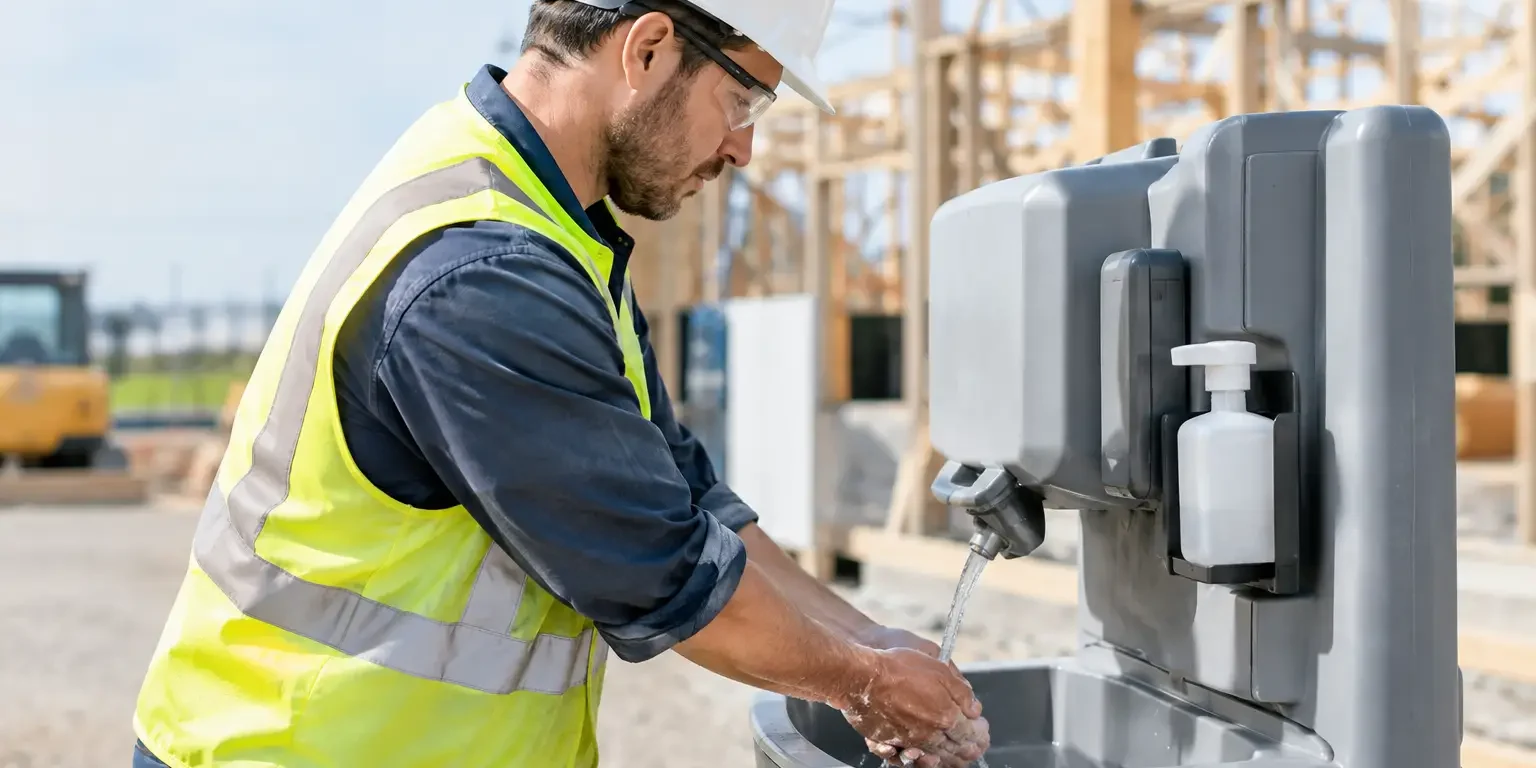
A toilet delivered to site is only part of the welfare picture. If your team are handling cement, adhesives, fuel, soil, insulation or general waste, the question is not simply do builders need handwashing stations, but whether the washing provision is suitable for the size, duration and nature of the job.
For most construction work in the UK, proper handwashing facilities are a site welfare requirement rather than an optional extra. Getting it right protects your workforce, helps keep the site professional and avoids the disruption of being challenged over poor welfare arrangements.
Do builders need handwashing stations under UK rules?
In most cases, yes. Construction projects must provide suitable and sufficient welfare facilities under the Construction (Design and Management) Regulations 2015. This includes sanitary conveniences, washing facilities, drinking water, a place to rest and facilities for changing where required.
The exact set-up depends on the project. A one-person job lasting a day is not managed in the same way as a busy, six-month housing development. However, a site should not rely on a basic toilet with a small hand sanitiser dispenser where workers need to remove dirt, dust or hazardous substances from their hands.
Suitable washing facilities normally mean access to water, soap or another suitable cleansing agent, and a way to dry hands. Warm running water is generally expected where it is reasonably practicable, particularly on longer-term sites or where the work is dirty. Facilities should be readily available, kept clean and maintained throughout the project.
This is why site managers should plan welfare at the same time as skips, fencing and access arrangements. Leaving it until operatives are already on site can create an unnecessary compliance problem and a poor first impression for clients, inspectors and subcontractors.
What counts as suitable handwashing provision on a building site?
A good answer starts with the work being carried out. Builders working on a clean internal refurbishment may need a different arrangement from a groundworks team handling mud, concrete and drainage materials all day.
A handwashing station should be positioned where people can use it without walking across an active work area or leaving site. It needs a reliable water supply, soap and hand-drying provision. It should also be serviced often enough that it remains clean, stocked and pleasant to use. If water runs out halfway through the week, the facility is not doing its job.
For many small and medium construction sites, a portable handwashing unit placed alongside the site toilet is a practical answer. It keeps toilet and washing provision together, makes expectations clear to every contractor on site and can be delivered without arranging a permanent water connection.
On larger projects, welfare units may be the better fit. These can provide more comprehensive facilities for bigger teams, particularly where the project will run for several weeks or months. The right choice comes down to the number of users, access for servicing, project duration and the amount of dirt-producing work taking place.
Hand sanitiser still has a role, especially near entrances, food areas and shared equipment. It is useful as an additional hygiene measure, but it is not a substitute for washing facilities when hands are visibly dirty or contaminated.
Short jobs and domestic building work
A common assumption is that handwashing stations are only needed on major commercial sites. That is not a safe approach. Even a home extension, roofing project or landscaping job needs suitable welfare arrangements for the people doing the work.
There can be flexibility on very short-duration or low-risk work where it is not reasonably practicable to provide standard facilities immediately. But this should be the exception, not a reason to make do with nothing. Using a customer’s kitchen or bathroom may also be unsuitable, inconvenient or unacceptable to the homeowner.
Hiring a site toilet and separate wash station can give small builders a clean, self-contained arrangement from day one. It protects the property, gives the workforce a proper place to wash up and helps keep the job organised when several trades are visiting.
Why handwashing matters beyond compliance
Construction is hands-on work. A team may be moving between materials, plant, food breaks and shared vehicle cabs throughout the day. Without a convenient place to wash, dirt and contaminants travel quickly into welfare areas, vehicles and homes.
There is also a practical productivity benefit. Operatives are more likely to use facilities that are nearby, clean and properly stocked. That reduces time spent searching for a tap or leaving site, while helping maintain better standards across the job.
For principal contractors, good welfare provision sends a clear message that the site is being managed properly. It can support relationships with subcontractors and make it easier to retain a reliable workforce. Poor facilities tend to create complaints early, particularly in winter when access to warm water makes a real difference.
Choosing the right hire set-up
Before arranging delivery, consider how many people will be on site at peak times, how long the project will last and whether the work creates heavy dirt or contamination. Also think about where a service vehicle can safely access the site and whether the unit will need moving as work progresses.
For a small job with a few operatives, a portable toilet with a dedicated handwashing station may be all that is needed. For a longer project with multiple trades, a welfare unit can offer a more complete base for breaks, washing and daily site management. It is usually more cost-effective to hire the right set-up at the beginning than to react after the site has outgrown basic provision.
Do not forget servicing. Facilities need regular cleaning, waste management and replenishment of consumables. A competitively priced unit is only good value if it stays usable for the full hire period. Ask what is included, how frequently the equipment will be serviced and who to contact if requirements change.
Local Toilet Hire Ltd supplies site toilets, handwashing facilities, welfare units, temporary fencing, generators and cabins across the UK, helping contractors source key temporary infrastructure through one responsive supplier. With more than 25 years of experience, we understand that a last-minute start date, restricted access or changing labour numbers need a practical answer, not a complicated process.
Our Trustpilot reviews are also a useful place to see feedback from customers who value dependable delivery and straightforward service. As the No.1 in the No.2 Business, we focus on making site welfare easier to arrange, whether you need one unit for a domestic build or a larger package for an active construction project.
A quick site welfare check before work starts
Before the first operative arrives, make sure the welfare plan answers these questions: Is there a suitable toilet? Can workers properly wash their hands with water, cleansing products and drying facilities? Is there drinking water and somewhere clean to take breaks? Can the equipment be serviced and kept accessible as the site changes?
If any answer is unclear, arrange the facilities before work begins. This is particularly worthwhile on fast-moving projects, where delivery slots and site access can become tighter once materials, plant and trades are all in place.
GET YOUR FREE QUOTE TODAY!
If you need a handwashing station, site toilet or complete welfare unit package, get your free quote today. Tell us your location, project dates, expected workforce and site access details, and we will help you arrange a practical hire solution that keeps your team properly provided for from the start.